


Release time:2020-01-16 18:44 Browse:
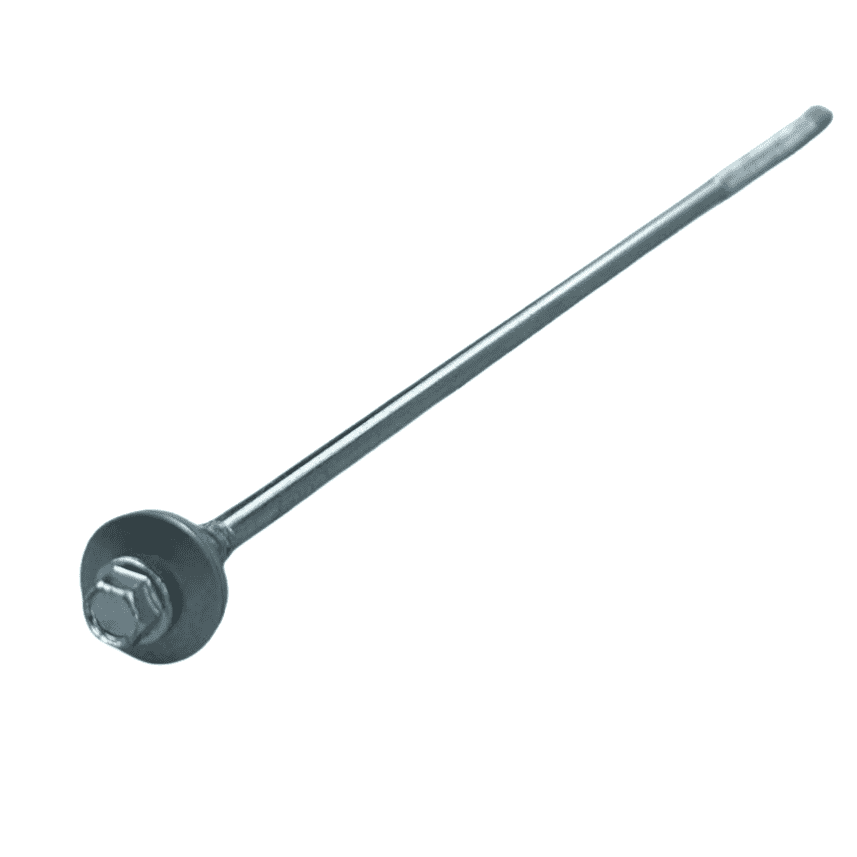
This is primarily determined by the two stages of Carburizing Heat Treatment:
Carburizing Stage
Purpose: To increase the carbon content on the surface of the screw.
Process: The screw is placed in a carbon-rich atmosphere (e.g., natural gas, propane) and heated to a high temperature (typically 910-930°C). At this temperature, the steel's crystal structure (austenite) can dissolve large amounts of carbon. Carbon atoms diffuse from the surface towards the interior, creating a gradient layer with high carbon concentration.
Result: After removal from the furnace, the carbon content distribution from the surface to the core decreases. The surface carbon content can reach 0.7%-1.0%, while the core maintains the original low carbon content (approx. 0.15%-0.25%).
Quenching and Tempering Stage
High-Carbon Surface Layer: The high carbon content results in a very hard but brittle martensite structure after quenching.
Low-Carbon Core: The low carbon content results in a lower hardness but highly tough structure of low-carbon martensite or bainite/ferrite after quenching.
Quenching: The carburized screw is rapidly cooled (quenched). The cooling rate is so fast that carbon atoms cannot precipitate out.
Tempering: After quenching, the screw has high internal stress and is brittle. It must be tempered (medium to low temperature). Tempering slightly reduces the surface hardness but, more importantly, relieves stress and improves toughness, allowing the product to achieve optimal comprehensive mechanical properties.
Simple Analogy: It's like "differential hardening" (e.g., clay tempering) a sword. A hard material is used for the cutting edge (high surface hardness for sharpness and wear resistance), and a tough material is used for the core (high core toughness to prevent breakage). The same principle applies to screws: the surface needs to be hard for wear and fatigue resistance, and the core needs to be tough to withstand high tensile forces and impact loads.
This range depends on the screw's property class (e.g., 8.8, 10.9, 12.9) and specific standards (e.g., GB/T, ISO, ASTM). The following is a general reference range:
| Location | Hardness Range (Typical Values) | Approximate Conversion (HRC) | Microstructure & Function |
|---|---|---|---|
| Surface Hardness | HV 420 - 600 | HRC 42 - 55 | High-carbon tempered martensite. Provides wear resistance and fatigue strength. |
| Core Hardness | HV 320 - 380 | HRC 33 - 39 | Low-carbon tempered martensite/bainite. Provides tensile strength and toughness, preventing brittle fracture. |
Detailed Explanation:
For Class 8.8 bolts: The core hardness is generally in the range of HRC 22-32, while the surface carburized layer will be harder.
For Class 10.9 bolts: The core hardness is generally in the range of HRC 33-39 (as shown in the table). This is the most common grade for high-strength bolts.
For Class 12.9 bolts: The requirements for material and process are extremely high. The core hardness can reach HRC 38-42, and the surface hardness will be correspondingly higher.
Important Notes:
Case Depth: This is typically defined as the vertical distance from the surface to the point where the hardness reaches HV 550 (approx. HRC 52.5). For screws, the carburizing depth is usually controlled between 0.1mm - 0.3mm depending on their size.
Avoiding Through-Hardening: For screws, the core must absolutely NOT be through-hardened (i.e., entirely transformed into high-carbon martensite). A through-hardened screw is very brittle and highly susceptible to delayed fracture under stress, which is extremely dangerous. Maintaining some toughness in the core is crucial for safety.
Reason: Carburizing heat treatment increases the carbon content on the screw's surface. Subsequent quenching and tempering result in a surface layer of hard, wear-resistant high-carbon martensite, while the core retains a tough low-carbon microstructure.
Range: The surface hardness is typically in the range of HV 420-600 (HRC 42-55), while the core hardness, depending on the property class, is generally in the range of HRC 25-39. This designed "hard surface, tough core" gradient structure is fundamental to ensuring that high-strength bolts can withstand high loads without brittle fracture.