


Release time:2020-01-16 18:44 Browse:
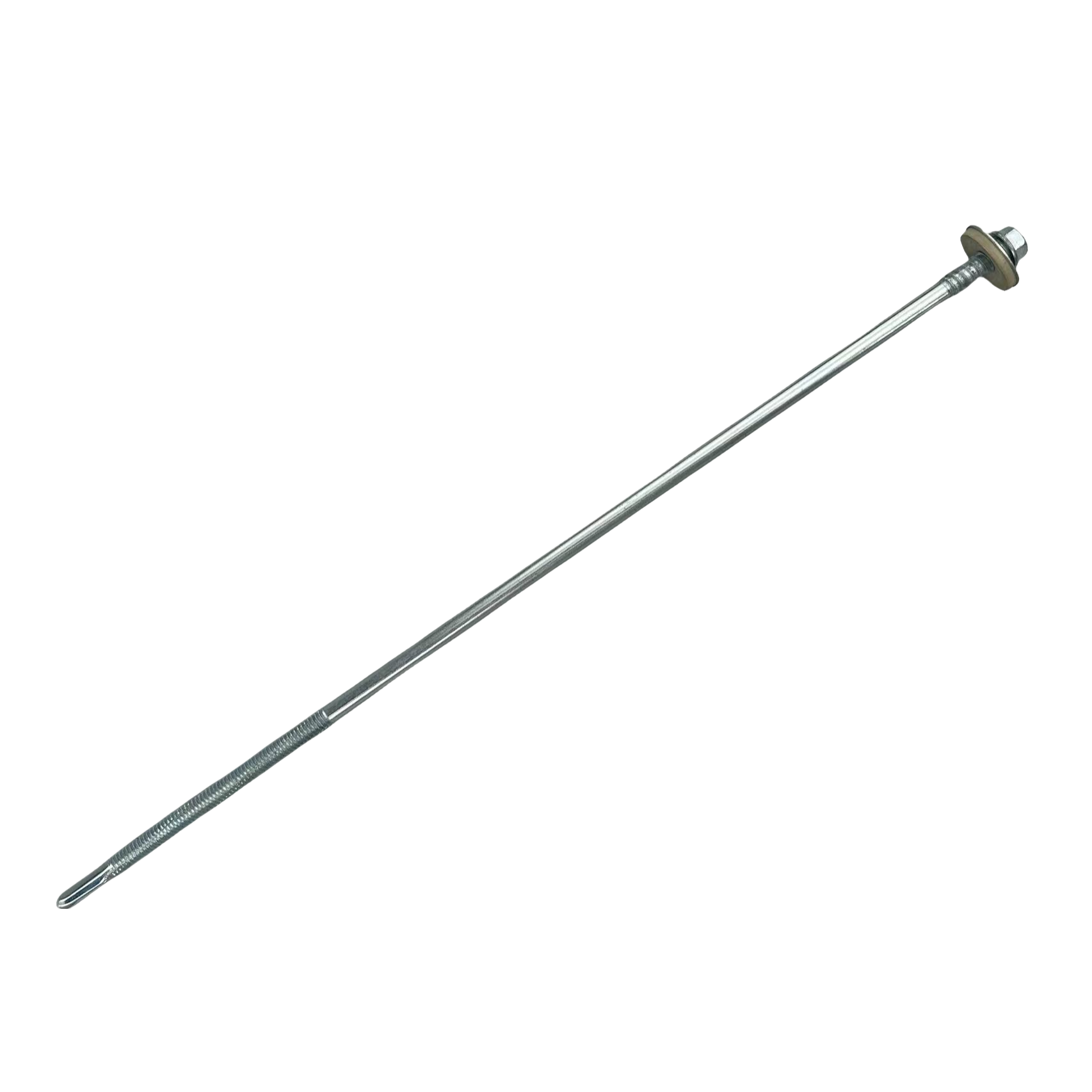
This is the most direct and effective method for small batches of parts.
Tools Required:
Platform: A flat, sturdy metal platform or plate.
Support Blocks: Two V-blocks or metal blocks of the same height to support the screw.
Pressing Device: A manual arbor press, hydraulic press, or a copper/hide mallet (Never use a steel hammer, as it will damage the threads).
Dial Indicator: Used for precisely measuring bend and straightening results.
Steps:
Measure the Bend: Place the screw on the V-blocks and roll it slowly. Use the dial indicator to find the highest point of the bend (peak) and mark it.
Apply Pressure: Position the screw with the convex side (peak) facing up, supported on both sides by the V-blocks (selecting the support points is crucial; too close is ineffective, too far may create new bends). Apply slow, steady pressure at the peak in the middle.
Overcompensation: Due to material springback, it's usually necessary to press slightly beyond the straight position.
Check Result: Release the pressure and measure again with the dial indicator. Repeat the process until the straightness meets requirements.
Stress Relief: It is highly recommended to perform low-temperature stress relief annealing after straightening (e.g., heat to 150-200°C, hold for a period, then cool in the furnace). This eliminates new internal stresses generated during straightening, preventing future deformation or even cracking during use or storage.
This method can be used for screws with obvious sharp bends.
Operation: Place the screw with the convex bend facing up. Use a hardened round steel bar (straightening bar) as a punch, align its tip with the convex area, and strike the punch with a hammer to perform localized,密集的 peening on the convex area.
Principle: The peening causes local compressive plastic deformation on the convex side, shortening the metal fibers and thus counteracting the original bend.
Note: This method requires significant operator skill. The force and location of the strikes must be controlled well, otherwise it might be ineffective or damage the part.
This is a more advanced method using stresses generated by localized heating and cooling.
Operation:
Find the convex side of the bend.
Use a small oxy-acetylene torch or induction heater to quickly heat one or several small spots on the peak of the convex side (spot diameter about 1/3 of the screw's diameter, temperature controlled between 700-850°C, visible as dull red).
Cool the heated spots immediately with air or water.
Principle: The rapid contraction of the heated spot upon cooling generates strong tensile stress, pulling the convex side straight.
Warning: This method requires extreme skill and must be performed by an experienced technician. Strictly control heating temperature and depth, otherwise it can alter the local microstructure, affecting the screw's hardness and performance, or even cause cracking.