


Release time:2020-01-16 18:44 Browse:
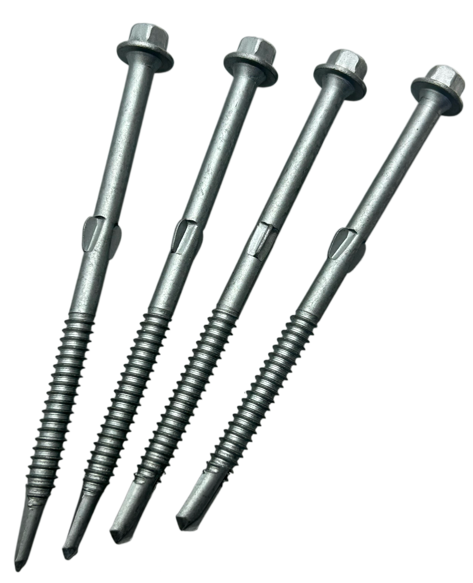
In curtain wall construction, the selection and use of self-tapping screws are governed by strict engineering standards. According to specifications such as the "Technical Code for Artificial Panel Curtain Wall Engineering" (JGJ 336-2016), these screws can be classified in detail based on three dimensions: functional application, type and structure, and material and specification.
I. Classification by Function and Application
This is the most fundamental classification method in curtain wall design, as different connection points impose different performance requirements on the screws.
| Functional Category | Primary Use | Key Requirements and Common Specifications |
|---|---|---|
| Structural Connectors | Connecting panel hangers to supporting members (such as sub-frames). These are the most critical load-bearing points, directly supporting panel weight and wind loads. | Stainless steel bolts or stainless steel self-drilling self-tapping screws are mandatory. The thread specification shall not be less than ST5.5, and anti-loosening and anti-slippage measures must be implemented. |
| Auxiliary Fasteners | Used for securing hangers, anti-slip, anti-jump, and other ancillary functions. For example, in terracotta panel curtain walls, self-drilling self-tapping screws are used to lock hangers or serve as anti-jump screws to prevent hanger disengagement. | Relatively smaller specifications with greater flexibility. For instance, project examples show anti-jump screws using ST4.2×13 and anti-slip screws using ST4.8×13. |
| System Component Connections | Connecting curtain wall sub-frames to main structure anchors, or for transitional connections between the curtain wall and main steel or masonry structures. | These connections typically use steel or aluminum alloy connectors and are predominantly bolted connections. The bolt diameter shall not be less than M10, and the number of bolts at each connection point shall not be fewer than 2. |
II. Classification by Type and Structure
From the perspective of the screw's physical configuration, the following two main types are used in curtain walls:
Self-Drilling Self-Tapping Screws (Drill Tail Screws / Wing Screws)
These are the workhorses of curtain wall installation. The tail features a drill-bit-like structure that allows the screw to drill, tap, and fasten in a single continuous action during installation, eliminating the need for pre-drilling and significantly improving construction efficiency. Self-drilling self-tapping screws are widely used for connecting metal sheets to sub-frames and have been extensively applied in curtain wall enclosure systems.
Ordinary Self-Tapping Screws
This type does not have a drill bit and requires pre-drilled pilot holes before tapping and fastening. Compared to self-drilling self-tapping screws, their application efficiency is lower, and they are used only in specific scenarios or where higher precision is required.
III. Classification by Material and Specification
The choice of material and specification directly affects corrosion resistance, mechanical strength, and suitability for the operating environment.
Classification by Material
304 Stainless Steel: Offers good corrosion resistance, typically achieving over 96 hours in salt spray tests, suitable for general outdoor environments.
316 Stainless Steel: Provides enhanced resistance to chloride ion corrosion, making it suitable for aggressive environments such as coastal areas.
410 Stainless Steel (Martensitic Stainless Steel): Offers the highest hardness, capable of drilling directly through thicker or harder steel plates, but has moderate corrosion resistance.
Stainless Steel: Since curtain walls are permanently exposed to outdoor conditions, stainless steel is the preferred material to resist corrosion.
Carbon Steel: Lower in cost and high in strength, but with inferior corrosion resistance compared to stainless steel. To improve corrosion protection, it is typically treated with zinc plating (e.g., blue-white zinc) or Dacromet coating, and can be used indoors or in areas with lower corrosion protection requirements.
Classification by Specification and Thread Size
Thread size is an important indicator of load-bearing capacity. Curtain wall codes specify minimum requirements for critical load-bearing areas. Common specifications include ST4.2, ST4.8, ST5.5, ST6.3, etc.
| Thread Specification | Nominal Diameter (dA, max) | Pitch (P) | Typical Applications |
|---|---|---|---|
| ST4.2 | 4.9 mm | 1.4 mm | Light-duty connections, such as auxiliary fasteners and thin sheet connections |
| ST4.8 | 5.6 mm | 1.6 mm | General-purpose connectors, commonly used for hanger anti-slip and medium-load fastening |
| ST5.5 | 6.3 mm | 1.8 mm | Minimum requirement for critical load-bearing connections, used for panel hanger to supporting member connections |
| ST6.3 | 7.3 mm | 1.8 mm | Higher-strength connection requirements, such as heavy panels or long-span structures |
A Critical Technical Reminder: Avoiding Galvanic Corrosion
Curtain wall design codes strictly stipulate that screws used for connecting metal components should be of the same material as, or have a similar electrochemical potential to, the metal components being connected. This is to prevent galvanic corrosion caused by contact between dissimilar metals, which could lead to complete connection failure—a critical point that must be addressed in curtain wall engineering. For example, stainless steel screws should not be directly connected to aluminum alloy components unless effective isolation measures are implemented.